6.08.2011

Atlantic Yards Opposition

The Atlantic Yards development project was publicly announced for the first time in December 2003. Since then, architects and financiers have come and gone and multiple proposals and renderings have been announced. At this point, the final product remains elusive.  Local journalists, community activists, and other opponents have criticized many iterations of the planned development.

The Fort Greene and Clinton Hill neighborhoods are predominantly characterized by three-to five-story brownstone row houses. Myrtle Avenue and Fulton Street are the neighborhood's major commercial corridors and are generally characterized by three/four-story apartment buildings with ground-level retail.  Much of the opposition is due to the mismatch in scale and character of the proposed Atlantic Yards development. 

Bloggers such as author Will James point out the 'developer's blight' and impact on neighborhood vibrancy of the planned development at Atlantic Yards.
"What I hope to show...is the character of the streets both to the north and the south of the railyards. These are overwhelmingly vibrant and beautiful areas...There are some empty and run down buildings here and there around the site, but the vast majority of these are actually owned and kept empty by Bruce Ratner himself."
Source: developdontdestroy.org   
DEVELOP DON'T DESTROY BROOKLYN (DDDB), a non-profit corporation founded in February 2004 opposed to Forest City Ratner's 8 million square foot "Atlantic Yards" development. 


"If you live in Prospect Heights, Fort Greene, Park Slope, Clinton Hill, Boerum Hill, Crown Heights, or Bedford-Stuyvesant, get ready to kiss your neighborhood goodbye. (Everyone else get ready to see your tax dollars given to a developer instead of your schools. " (DDDB)

Developer's blight or revitalization?

The use of eminent domain is often controversial when acquiring land and property. Since Kelo vs New London in 2005, US courts have often sided with municipalities that claim increased tax revenue or job growth even at the expense of displacement, gentrification, or community transformation.  Empire State Development claims the Atlantic Yards project is a means for "fostering sustainable growth, creating jobs, reviving our economy and expanding opportunities for all New Yorkers."  At $4 billion, the project includes 16 residential, office, retail, community facilities, and parking buildings, 8 acres of public space, and is expected to create thousands of construction and permanent jobs.  As the much delayed construction continues, the developers continue to push against community opposition with weekly construction updates, glossy renderings, and hearings.

6.07.2011

Atlantic Yards


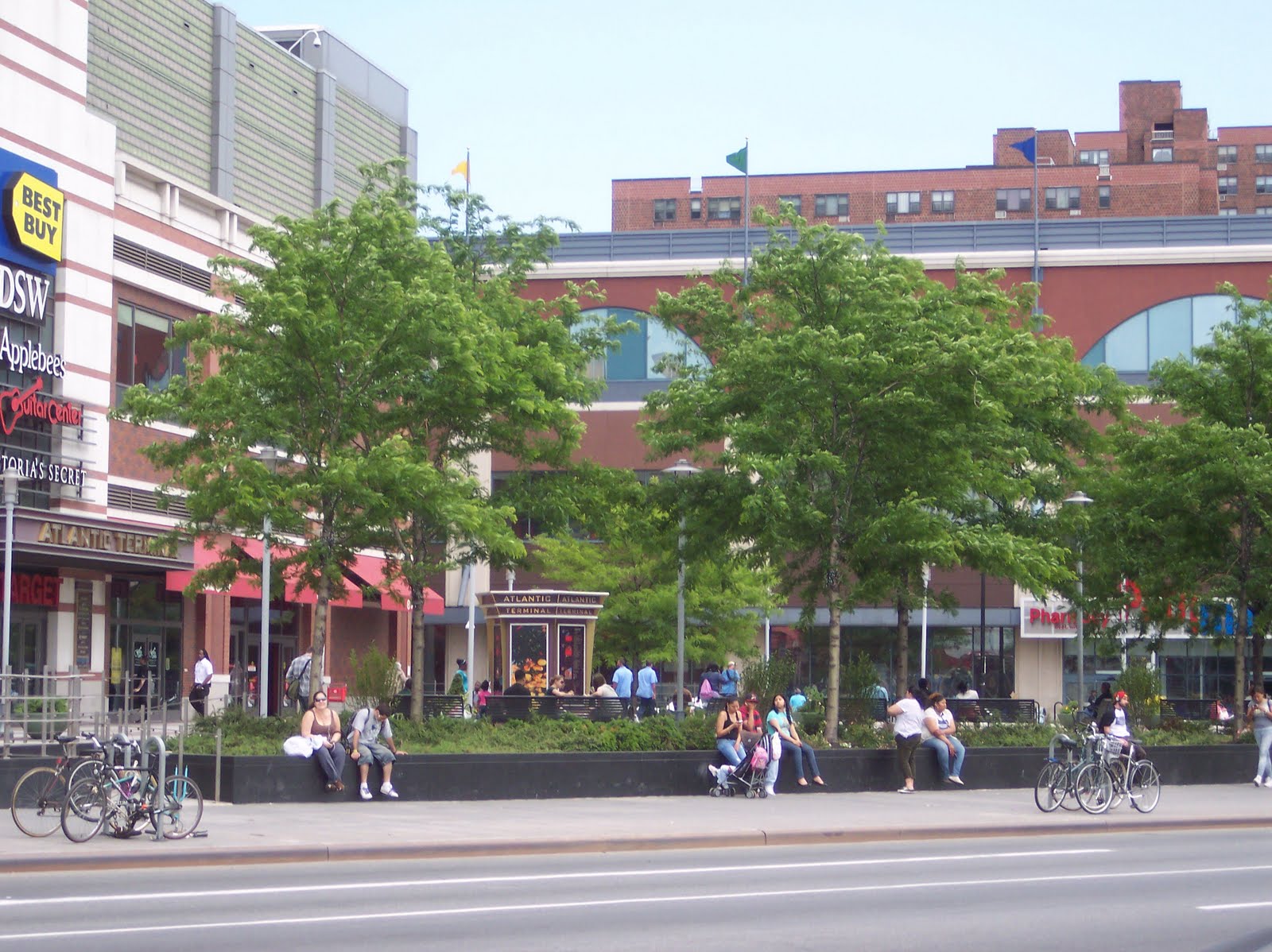
The Atlantic Yards development project is a controversial mixed-use development project under construction between Prospect Heights and Fort Greene in Brooklyn to include residential and commercial high-rises, as well as a sports arena for the New Jersey Nets. Developer Forest City Ratner has faced tense opposition for various community groups since the plans were announced in 2003 due to questionable use of eminent domain, criticism of design plans, and opposition to changing the character of the surrounding neighborhoods. Currently under construction, the project will undoubtedly change the aesthetics of the Flatbush and Atlantic Avenue corridor and its primarily residential surrounding communities.

6.05.2011

Development in Columbus Circle surged after demolition of the Coliseum in 1987 attracting new retail and causing historic preservationists to intervene.  While many buildings were preserved, others were redesigned, changing the look of the neighborhood.